
Colon Polyps
- posted: Apr. 24, 2025
Colorectal polyps are small, abnormal cellular growths that can occur in the inner lining of the colon or rectum of the large intestine. While most colorectal polyps are non-cancerous or benign, some can develop into colorectal cancer in the long run.
Colorectal polyps are commonly detected during a standard screening exam of the rectum or colon. While the polyps can grow in any part of the colon, it is most commonly seen on the left side.
When detected, doctors remove colorectal polyps to reduce the future risk of colorectal cancer.
Types of Colorectal Polyps
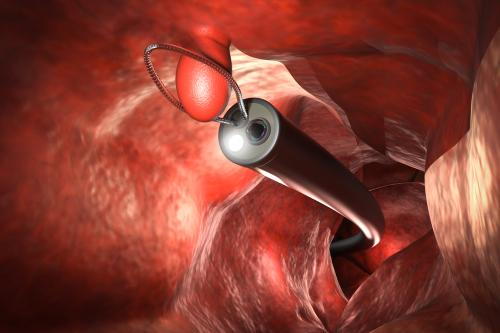
Colorectal polyps can be of different shapes and sizes. The ones that appear as a mushroom on a stalk are called pedunculated polyps. Others like sessile polyps may appear flat or slightly indented and grow along the surface without a stalk.
The types of colorectal polyps include:
Adenomatous colon polyps:
Also known as adenomas, they are the most common form of polyps that appear as gland-like growths. They are of the following types:
- Tubular polyps: They protrude out in the open space of the colon;
- Villous adenoma: They are usually flat and likely to become cancerous;
- Tubulovilious polyps: They exhibit characteristics of both tubular and villous polyps.
Serrated polyps:
They include:
- Hyperplastic polyps: They are small growths with a low risk of developing into colorectal cancer.
- Sessile serrated polyps: They are flat and slightly raised polyps that are considered precancerous.
- Traditional serrated adenomas: A type of precancerous polyp.
Inflammatory or pseudopolyps:
Common in people with inflammatory bowel disease (IBD), the polyps are benign, noncancerous growths that occur from chronic colon inflammation.
Complex polyps:
Also known as defiant polyps, they have features like:
- A size greater than 2 cm.
- Too sessile to be removed by straightforward techniques.
- Polyps that cannot be safely removed.
Colorectal Polyps Symptoms
While most colorectal polyps do not have any symptoms, some may have symptoms that include:
- Rectal bleeding
- Blood in stool
- Abdominal pain
- Nausea
- Constipation or diarrhea
- Vomiting
- Anemia
Colorectal Polyps Causes
While the exact cause is unknown, colorectal polyps can occur from a faulty gene that causes the cells to multiply at an abnormal rate.
Other contributing causes include:
Genetic disorders:
Colorectal polyps may run in the family and may be associated with inherited disorders like:
- Familial adenomatous polyposis (FAP)
- Gardner syndrome
- Juvenile polyposis that causes benign intestinal growth before 20 years of age
- Peutz-Jegher’s syndrome, a benign growth of intestinal polyps in the small intestine
- Lynch disease or hereditary non-polyposis colorectal cancer (HNPCC) that increases the risk of many types of intestinal cancers
Environment:
The risk factors include:
- Age 45 years and older
- Obesity
- High fat, low fiber diet
- Alcohol and tobacco use
- Inflammatory bowel disease, like ulcerative colitis of Crohn’s disease.
Colorectal Polyps Diagnosis:
Screening tests can detect colorectal polyps before they become cancerous. The tests include:
- Colonoscopy: A small tube with light and a camera is inserted into the colon to look for polyps.
- Virtual colonoscopy: A CT scan is done after a bowel preparation for colonoscopy.
- Flexible sigmoidoscopy: Used to examine the last third of the colon.
- Stool tests: A fecal occult blood test to check for blood in stool.
- Blood tests: The FDA has approved a new blood test for colorectal cancer screening.
- Imaging tests: This includes capsule endoscopy and lower GI X-ray exams.
There is an increased risk of developing colon cancer where:
- More than three polyps are detected.
- Polyps are on the right side of the colon.
- The polyps have an increased cancer risk.
- They are larger than 10 mm.
- There exists a hereditary polyposis syndrome.
Colorectal Polyps Treatment
Colorectal polyps are removed during a bowel exam. The removal options include:
- Polypectomy: Polyps are removed during colonoscopy to prevent colorectal cancer;
- Laparoscopic surgery: Where polyps are too large and cannot be removed during colonoscopy, they are removed with laparoscopic surgery where a part of the bowel with the polyps or cancer is removed;
- Total proctocolectomy: The entire colon and rectum are surgically removed to protect from colorectal cancer.
Sources:
https://www.nyp.org/digestive/colorectal-diseases/colorectal-polyps
https://medlineplus.gov/colonicpolyps.html
https://fascrs.org/patients/diseases-and-conditions/a-z/polyps-of-the-colon-and-rectum
https://www.cancer.gov/types/colorectal/screening-fact-sheet
https://www.yalemedicine.org/conditions/colorectal-polyps
https://www.mayoclinic.org/diseases-conditions/colon-polyps/symptoms-causes/syc-20352875
https://my.clevelandclinic.org/health/diseases/15370-colon-polyps
https://medlineplus.gov/ency/article/000266.htm
https://www.mayoclinic.org/diseases-conditions/colon-polyps/diagnosis-treatment/drc-20352881
https://www.uofmhealth.org/conditions-treatments/digestive-and-liver-health/colon-and-rectal-polyps
https://www.nyp.org/digestive/colorectal-diseases/colorectal-polyps
- posted: Apr. 24, 2025
Colorectal polyps are small, abnormal cellular growths that can occur in the inner lining of the colon or rectum of the large intestine. While most colorectal polyps are non-cancerous or benign, some can develop into colorectal cancer in the long run.
Colorectal polyps are commonly detected during a standard screening exam of the rectum or colon. While the polyps can grow in any part of the colon, it is most commonly seen on the left side.
When detected, doctors remove colorectal polyps to reduce the future risk of colorectal cancer.
Types of Colorectal Polyps
Colorectal polyps can be of different shapes and sizes. The ones that appear as a mushroom on a stalk are called pedunculated polyps. Others like sessile polyps may appear flat or slightly indented and grow along the surface without a stalk.
The types of colorectal polyps include:
Adenomatous colon polyps:
Also known as adenomas, they are the most common form of polyps that appear as gland-like growths. They are of the following types:
- Tubular polyps: They protrude out in the open space of the colon;
- Villous adenoma: They are usually flat and likely to become cancerous;
- Tubulovilious polyps: They exhibit characteristics of both tubular and villous polyps.
Serrated polyps:
They include:
- Hyperplastic polyps: They are small growths with a low risk of developing into colorectal cancer.
- Sessile serrated polyps: They are flat and slightly raised polyps that are considered precancerous.
- Traditional serrated adenomas: A type of precancerous polyp.
Inflammatory or pseudopolyps:
Common in people with inflammatory bowel disease (IBD), the polyps are benign, noncancerous growths that occur from chronic colon inflammation.
Complex polyps:
Also known as defiant polyps, they have features like:
- A size greater than 2 cm.
- Too sessile to be removed by straightforward techniques.
- Polyps that cannot be safely removed.
Colorectal Polyps Symptoms
While most colorectal polyps do not have any symptoms, some may have symptoms that include:
- Rectal bleeding
- Blood in stool
- Abdominal pain
- Nausea
- Constipation or diarrhea
- Vomiting
- Anemia
Colorectal Polyps Causes
While the exact cause is unknown, colorectal polyps can occur from a faulty gene that causes the cells to multiply at an abnormal rate.
Other contributing causes include:
Genetic disorders:
Colorectal polyps may run in the family and may be associated with inherited disorders like:
- Familial adenomatous polyposis (FAP)
- Gardner syndrome
- Juvenile polyposis that causes benign intestinal growth before 20 years of age
- Peutz-Jegher’s syndrome, a benign growth of intestinal polyps in the small intestine
- Lynch disease or hereditary non-polyposis colorectal cancer (HNPCC) that increases the risk of many types of intestinal cancers
Environment:
The risk factors include:
- Age 45 years and older
- Obesity
- High fat, low fiber diet
- Alcohol and tobacco use
- Inflammatory bowel disease, like ulcerative colitis of Crohn’s disease.
Colorectal Polyps Diagnosis:
Screening tests can detect colorectal polyps before they become cancerous. The tests include:
- Colonoscopy: A small tube with light and a camera is inserted into the colon to look for polyps.
- Virtual colonoscopy: A CT scan is done after a bowel preparation for colonoscopy.
- Flexible sigmoidoscopy: Used to examine the last third of the colon.
- Stool tests: A fecal occult blood test to check for blood in stool.
- Blood tests: The FDA has approved a new blood test for colorectal cancer screening.
- Imaging tests: This includes capsule endoscopy and lower GI X-ray exams.
There is an increased risk of developing colon cancer where:
- More than three polyps are detected.
- Polyps are on the right side of the colon.
- The polyps have an increased cancer risk.
- They are larger than 10 mm.
- There exists a hereditary polyposis syndrome.
Colorectal Polyps Treatment
Colorectal polyps are removed during a bowel exam. The removal options include:
- Polypectomy: Polyps are removed during colonoscopy to prevent colorectal cancer;
- Laparoscopic surgery: Where polyps are too large and cannot be removed during colonoscopy, they are removed with laparoscopic surgery where a part of the bowel with the polyps or cancer is removed;
- Total proctocolectomy: The entire colon and rectum are surgically removed to protect from colorectal cancer.
Sources:
https://www.nyp.org/digestive/colorectal-diseases/colorectal-polyps
https://medlineplus.gov/colonicpolyps.html
https://fascrs.org/patients/diseases-and-conditions/a-z/polyps-of-the-colon-and-rectum
https://www.cancer.gov/types/colorectal/screening-fact-sheet
https://www.yalemedicine.org/conditions/colorectal-polyps
https://www.mayoclinic.org/diseases-conditions/colon-polyps/symptoms-causes/syc-20352875
https://my.clevelandclinic.org/health/diseases/15370-colon-polyps
https://medlineplus.gov/ency/article/000266.htm
https://www.mayoclinic.org/diseases-conditions/colon-polyps/diagnosis-treatment/drc-20352881
https://www.uofmhealth.org/conditions-treatments/digestive-and-liver-health/colon-and-rectal-polyps
https://www.nyp.org/digestive/colorectal-diseases/colorectal-polyps
Main Office
109-19 72nd Rd.,
Forest Hills, NY 11375
Satellite Office
74-10 Broadway, 3rd Floor,
Elmhurst, NY 11373
Monday
9:00 am - 5:00 pm
Tuesday
9:00 am - 5:00 pm
Wednesday
9:00 am - 5:00 pm
Thursday
9:00 am - 5:00 pm
Friday
9:00 am - 5:00 pm
Saturday
Closed
Sunday
Closed